If climbing the stairs at home has become harder, you should not have to give up the home you love. For NDIS participants, one of the first questions is a practical one: can your plan help with the cost of a home lift?
The honest answer is that it can, in the right circumstances. The NDIS treats a home lift as a complex home modification, and like every NDIS support, it needs to meet the scheme’s funding criteria before it can be included in your plan. Here is a clear overview of how it works.
Are home lifts covered by the NDIS?
The NDIS can fund changes to your home that help you move around safely and live more independently because of your disability. These range from minor changes, such as widening a doorway, through to complex structural work.
A home lift sits firmly in the complex category. Complex home modifications usually involve building approvals, certified electrical work, and input from building professionals, so they are assessed more thoroughly than minor changes. If your lift is approved, the funding is included in the Capital, Home Modifications budget of your plan and can only be used for the modification described there.
How the NDIS makes its decision
A home lift is not funded simply because the stairs have become difficult. Every support must meet the NDIS funding criteria. In short, the NDIS considers whether the lift:
- relates to your disability support needs;
- helps you pursue your goals and take part in everyday, social and working life;
- is effective, beneficial, legal and safe;
- is a support the NDIS is responsible for funding;
- is value for money.
Value for money carries real weight here. The NDIS will consider whether a lower-cost option could achieve the same result, how long you intend to stay in your home, and whether the lift would reduce your need for other supports. Being clear with your assessor about your long-term plans helps the NDIS see the full picture.
The funding process, step by step
While every situation is different, the path to a funded home lift generally follows these stages.
- Start the conversation. Raise your home and living needs with your NDIS contact or support coordinator, either at a plan check-in or by completing a change of situation form.
- Get an assessment. A home modification assessor, an occupational therapist qualified in detailed home modifications, will assess your needs and recommend the right supports. The NDIS usually funds this assessment through your Capacity Building budget.
- Plan the work. A building construction practitioner confirms the lift is feasible in your home and prepares the scope of work so builders can quote accurately.
- Obtain quotes. Complex home modifications require two itemised quotes from suitably qualified, licensed builders.
- The NDIS decides. Your assessment, quotes and approvals are reviewed against the funding criteria. For higher-risk work, the NDIS may also fund a building works project manager to help oversee the build.
Approvals you will need
Before the NDIS can fund a lift, you need written approval from the legal owner of the property. Depending on your situation, you may also need:
- confirmation from your landlord, if you rent, including whether the lift must be removed at the end of your lease;
- approval from your mortgage provider;
- permission from the body corporate or owners corporation, if you live in an apartment or community title property.
A word on timing
This part matters. Do not sign a building contract or pay for any work before the funding is confirmed in your plan. The NDIS needs to review your needs first, and spending money early can mean the cost is not covered.
New homes and existing homes
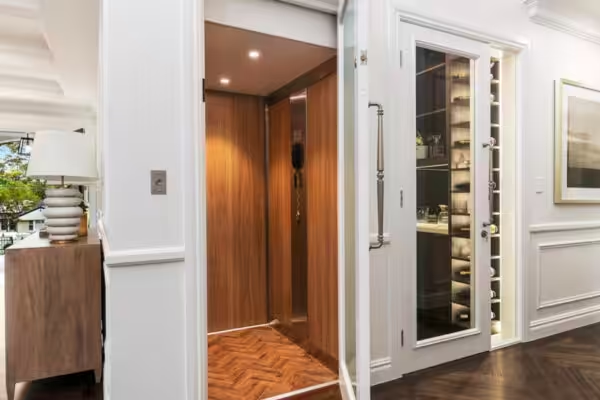
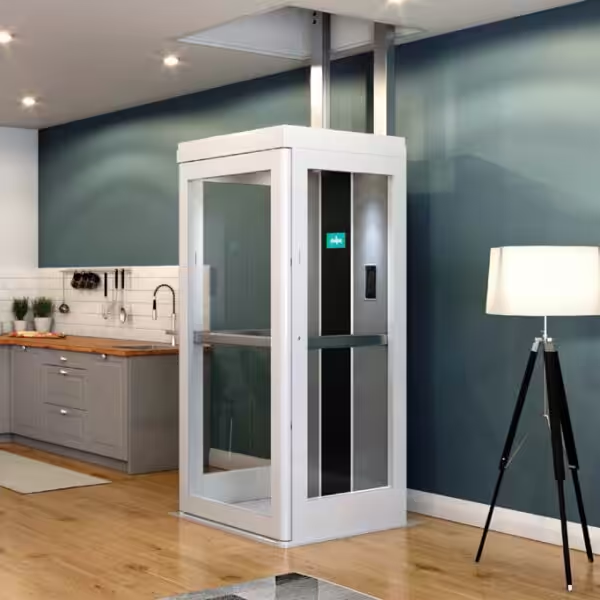
If you live in an established two-storey home, a retrofit lift is usually the most practical solution. Our Iconic lift is designed for exactly this. Its self supporting structure installs into an existing home with minimal disruption and short lead times.
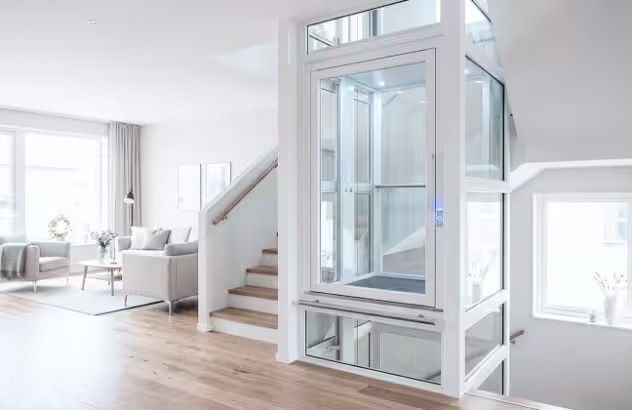
If you are building a new home, speak with the NDIS before your plans are finalised. Our Compass lift is designed to be integrated into a new build, and we can provide the drawings and specifications your architect or building designer will need.
How Velocity Home Lifts can help
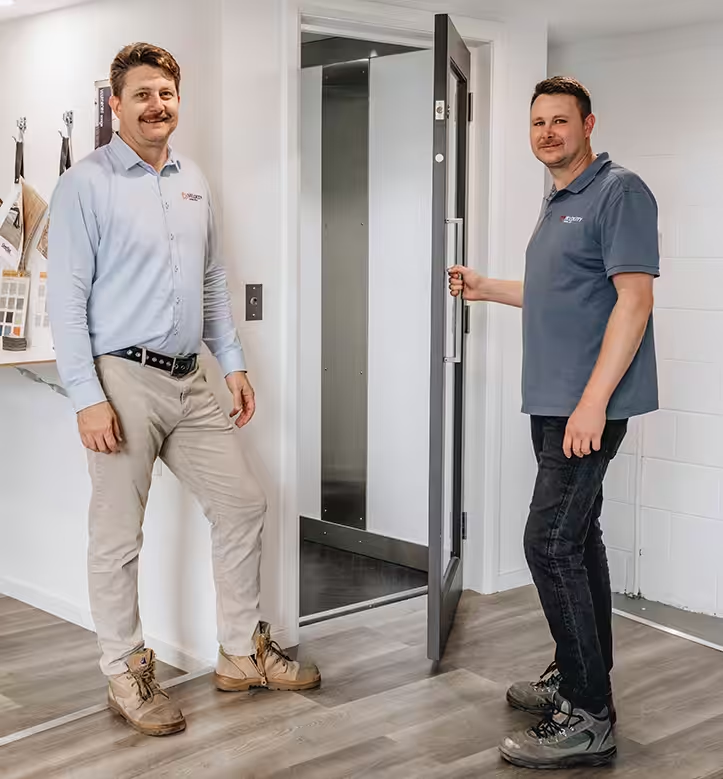
At Velocity Home Lifts, we believe a change in mobility should never mean leaving the home you love. We are an Australian owned, owner operated business, and we work side by side with occupational therapists, building professionals and NDIS participants, so the funding process is familiar ground for us. We will gladly prepare the itemised quotes, specifications and drawings your assessor and builder need, keep things moving with short lead times, and back our lifts with an industry leading warranty.
Choosing a home lift is a considered decision, and it should feel reassuring rather than daunting. Whenever you are ready, our team is here to talk things through in plain language and at your own pace, with honest advice and no pressure.
If you are working through the NDIS process, contact us, and we can provide the quotes, specifications and drawings your assessor will need.
This article is general information and is current at the date of publication. NDIS guidelines can change, so please confirm the latest details at ourguidelines.ndis.gov.au or with your NDIS contact, support coordinator or occupational therapist.