
Building your forever home is one of the most significant investments you will ever make. It is not just about selecting the right finishes or getting the kitchen layout perfect. It is about designing a home that works for you today, in ten years, and well beyond that. For those planning a multi-level build, that long-term thinking needs to extend into how you will actually move through your home as the years go on.
Too often, features that support long-term liveability are treated as afterthoughts. But by the time the need arises, the cost and complexity of retrofitting can be substantial. The smarter approach is to plan for it from the very start, while the blueprints are still on the table.
Why Planning Ahead Matters More Than Ever
According to the Australian Institute of Health and Welfare, one in six Australians is already aged 65 or over, and that proportion is projected to reach as high as 23% by 2066. The Australian Bureau of Statistics has also reported that the population aged 85 and over grew by 110% in the two decades to 2020, far outpacing total population growth.
More recently, the Property Council of Australia highlighted that the number of Australians aged 75 and over is projected to increase by 49% over the next decade, surpassing 3.2 million by 2034. These are not distant projections. They reflect the reality of the generation currently building homes. For anyone planning a multi-level build, the message is clear: plan for the long term now, while you have the freedom to do so without compromise.
What Actually Makes a Home a Forever Home
A forever home is not simply a house you love. It is a house that adapts with you. That means considering not just how you live now, but how your needs might change. Will you always be comfortable navigating stairs multiple times a day? Will the layout still work after a knee replacement or a period of recovery?
The Australian Government’s YourHome guide on liveable and adaptable housing outlines the principles of universal design: creating homes usable by all people, without the need for later adaptation. Since 2023, the National Construction Code has required new housing to meet the Livable Housing Design Standard, encouraging features such as step-free entries, wider doorways, and accessible bathrooms. These are positive steps, but for a multi-level home, they only address part of the picture. A step-free entry does not solve the fundamental challenge of getting between floors.
Including a Home Lift in the Design Phase
A residential home lift is no longer a luxury reserved for penthouses or commercial buildings. It is a practical, forward-thinking feature that makes multi-level living genuinely sustainable over the long term. And the single biggest advantage of including one in a new build is that it integrates seamlessly into the design from day one.
When a lift is planned alongside the rest of the home, it can be positioned to complement the floor layout rather than compromise it. Your architect or building designer can account for the shaft space, structural requirements, and access points at every level. Wiring, framing, and service routing can all be coordinated during the build, reducing cost and avoiding the disruption that comes with adding a lift later.
By contrast, retrofitting a lift into an existing home often involves cutting through floors, reinforcing structures, and rerouting services. The Victorian Government has estimated that incorporating liveable design features at the build stage can be up to 22 times cheaper than retrofitting those same features at a later date.
Designed to Fit, Not Stand Out
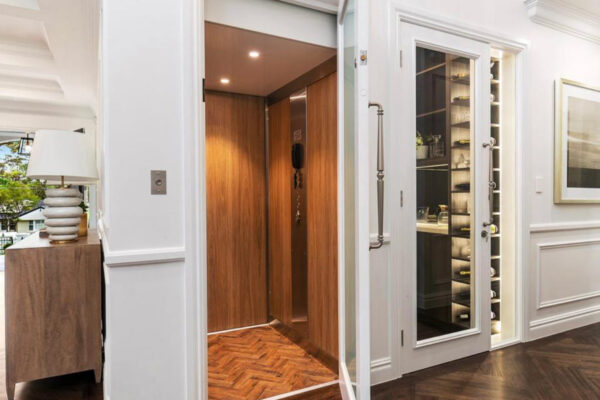
One concern some homeowners have is that a lift will feel clinical or out of place. Modern residential lifts are designed with exactly the opposite intention, integrating into the home’s architecture with customisable cabin finishes and door designs.
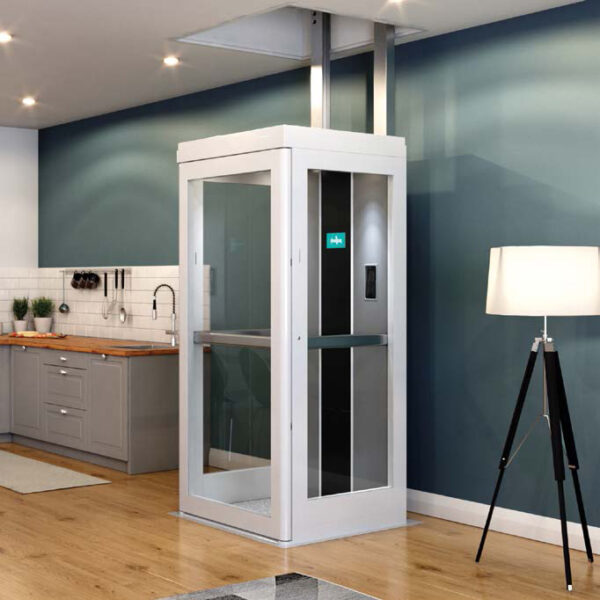
Australian-made lifts such as the Compass home lift are built with a self-supporting steel structure, meaning they do not require load-bearing concrete walls or significant structural reinforcement. This is particularly relevant for Australian homes, where the vast majority of residential construction on the east coast uses a timber frame with brick veneer cladding. A self-supporting lift structure integrates directly into that build type, reducing complexity and cost. With the motor housed discreetly in the roof space, the footprint inside the home remains minimal.
Working with Your Builder and Designer
The best outcomes come from involving the right people early. If you are working with a custom home builder, architect, or building designer, raising the topic of a home lift during the initial design conversations ensures it is factored into the plans from the outset. This avoids the common scenario of trying to fit a lift into a space that was never designed for one.
A reputable lift supplier will provide CAD files and technical drawings that your design team can work with directly, making it straightforward to integrate the lift shaft and access points into the architectural plans. Whether you are building a two-storey home or a three-level design with a basement, the lift can be configured to connect every level. The key is to plan it in, not bolt it on.
A Smart Investment, Not a Reactive Purchase
There is a meaningful difference between choosing a lift because you need one today and choosing a lift because it is the right decision for the home you are building. The first scenario often involves urgency, disruption, and compromise. The second is simply good design.
A home lift provides day-to-day convenience long before it becomes a necessity. Moving heavy items between floors, carrying groceries, or simply reducing unnecessary trips up and down stairs are practical benefits homeowners enjoy from the moment the lift is installed. Over time, that convenience evolves into genuine independence, allowing you to remain in the home you built without being limited by its layout. It also adds tangible value to the property, signalling quality, foresight, and a commitment to long-term liveability.
Your Forever Home Starts on the Drawing Board
Building a multi-level forever home is an opportunity to get things right once. The layout, the materials, and the features that will serve you for decades all deserve careful thought at the design stage. A home lift is not an afterthought or a concession to ageing. It is a deliberate, forward-thinking choice that makes your home work better from the day you move in.
If you are in the early stages of planning a multi-level build, now is the time to explore how a home lift can be part of your design. Speak with your architect or building designer, and get the conversation started before the plans are finalised. Your future self will thank you.